

By Charles, Director of Operations at Motion Transport. Charles has spent enough years coordinating interprovincial moves to know that the real sticker shock never comes from the truck — it comes from the paperwork nobody mentioned.
Why Province-to-Province Moving Costs More Than You Think
Most Canadians budget for a truck. Then they get blindsided by the other 30–50% of the bill: admin fees, insurance gaps, provincial registration costs, and government paperwork that eats entire afternoons.
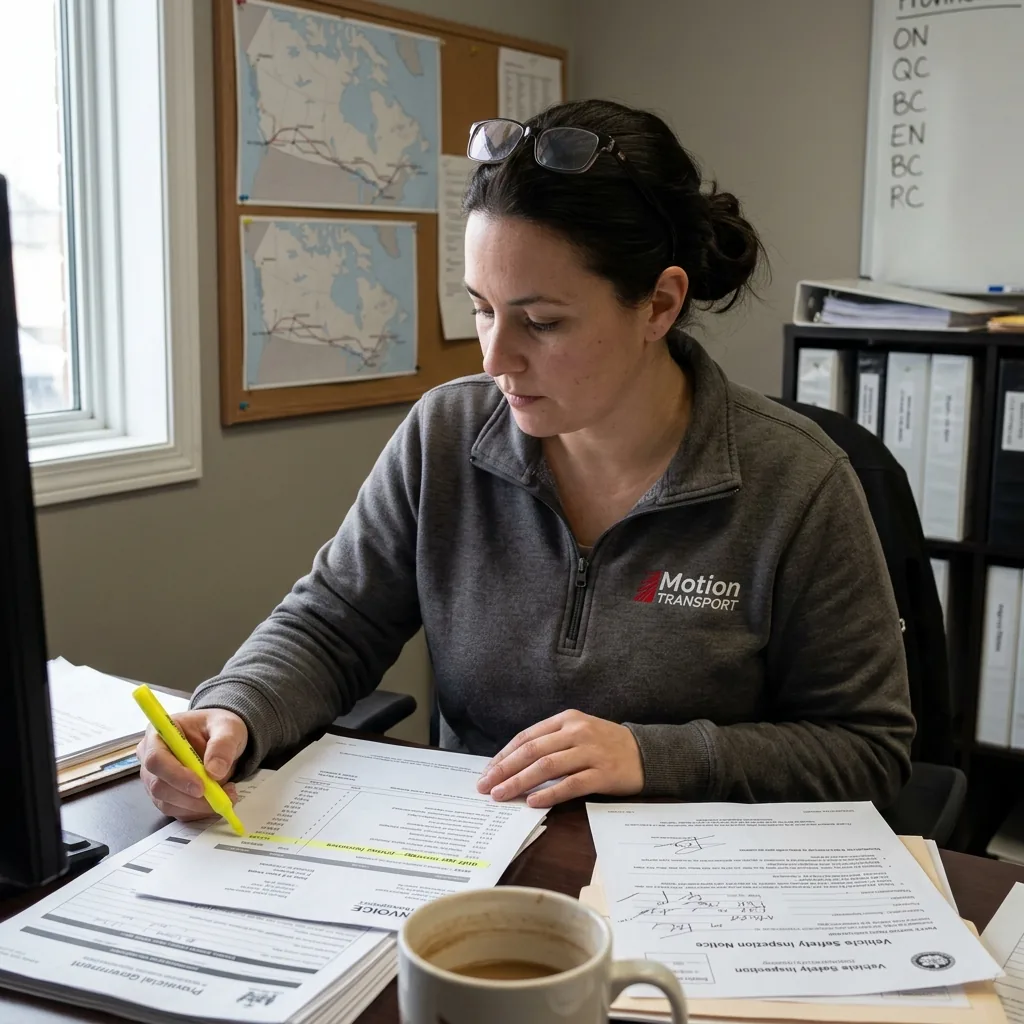
Statistics Canada’s interprovincial migration figures show roughly 300,000+ Canadians moved between provinces in 2025–2026. That’s a lot of people discovering surprise costs the hard way.
I coordinate over 500 province to province moving shipments a year at Motion Transport. The number-one thing people tell me after they land? “I had no idea it would cost that much beyond the movers.” They’re not talking about the freight. They’re talking about the OHIP gap that forced them to buy private coverage, the vehicle safety inspection their new province demanded, and the insurance switchover they forgot until it was too late.
This article covers real cost data for 2026, the full admin checklist with deadlines, liability coverage most people don’t understand, and how to spot scams before your furniture ends up on a hostage truck. I’ve referenced the Canadian Association of Movers (CAM) and their “Protect Your Move” consumer program throughout, alongside provincial government sources.
Cost to Move Across Canada in 2026: Average Prices by Home Size and Route
A cross-country quote depends on two things: how much stuff you own and how far it’s going. Everything else is a modifier.
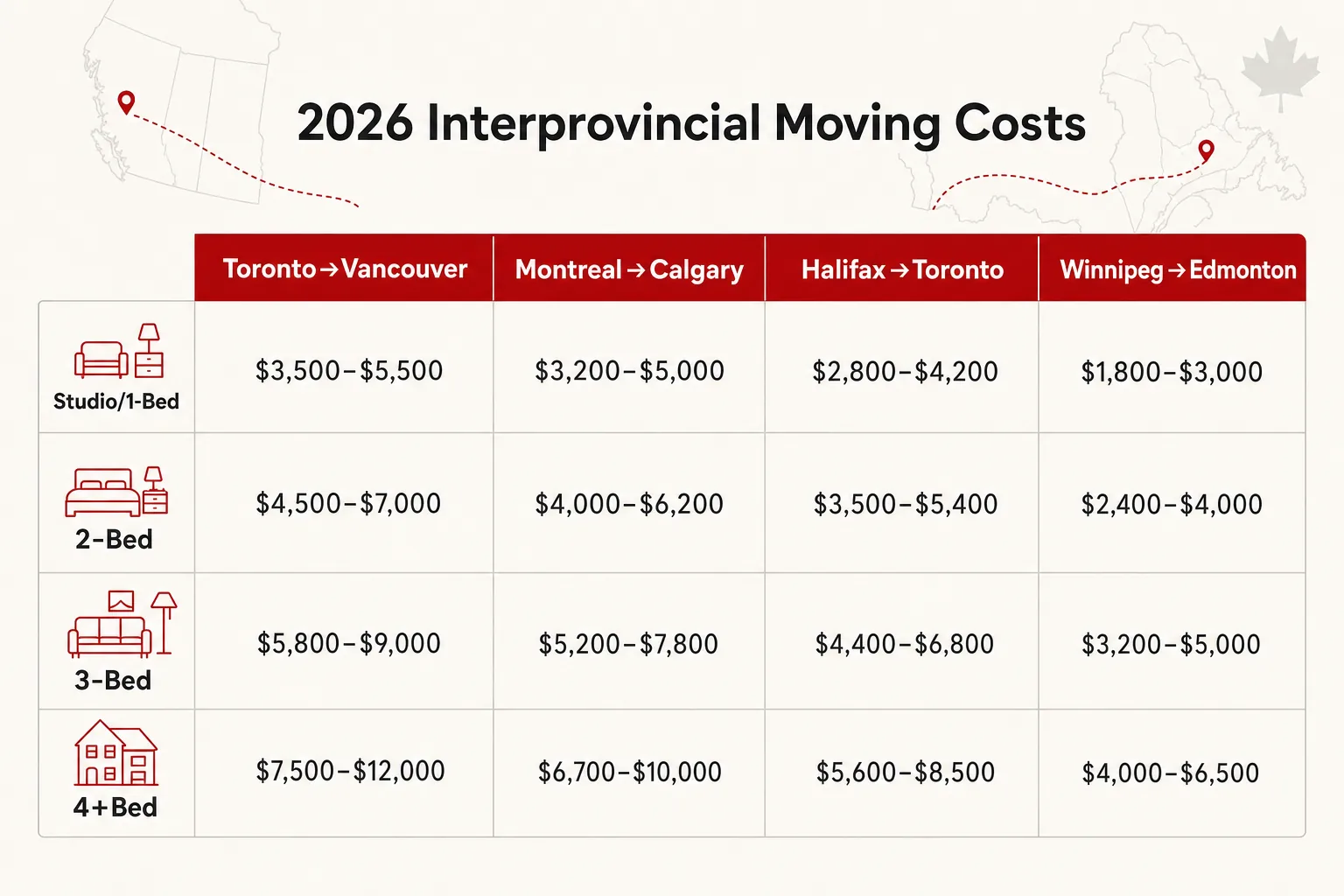
Here are the 2026 averages I’m seeing across popular routes, corroborated by CAM industry benchmarks and HomeStars pricing data. These are all-in estimates — truck, labour, basic valuation — for a standard door-to-door move.
| Home Size | Toronto → Vancouver | Montreal → Calgary | Halifax → Toronto | Winnipeg → Edmonton |
|---|---|---|---|---|
| Studio / 1-Bed | $3,500–$5,500 | $3,200–$5,000 | $2,800–$4,200 | $1,800–$3,000 |
| 2-Bed | $5,500–$8,500 | $5,000–$7,800 | $4,200–$6,500 | $3,000–$4,800 |
| 3-Bed | $8,500–$13,000 | $7,800–$11,500 | $6,500–$9,500 | $4,800–$7,200 |
| 4+ Bed | $13,000–$18,000+ | $11,500–$16,000+ | $9,500–$14,000+ | $7,200–$10,500+ |
For a deeper breakdown, see what is average cost of moving to another province.
What Drives the Price
| Cost Factor | Typical Range | Notes |
|---|---|---|
| Base rate per lb | $0.50–$0.85/lb | Weight-based pricing is standard for long-haul |
| Fuel surcharge | 8–15% | Fluctuates with diesel prices |
| Packing services | $300–$1,200 | Full pack vs. partial pack |
| Storage (per month) | $150–$400 | If delivery dates don’t align |
| Seasonal surcharge | +15–25% | Peak season: June through August |
The Back-of-Napkin Formula
(Estimated weight × rate per lb) + distance surcharge + extras = ballpark total
A 2-bedroom apartment typically weighs 4,000–5,000 lbs. At $0.65/lb over 4,000 km with a 10% fuel surcharge and $500 in packing, you’re looking at roughly $3,400–$4,200 before seasonal adjustments. June? Add another 20%.
How to Spend Less
Move between September and April. That alone can cut 15–25% off the price. Declutter before the estimator shows up — every pound you don’t ship is money you keep. Do your own packing on non-fragile items. And get at least three binding estimates. Not ballpark guesses — binding written quotes based on in-home or video surveys.
CAM recommends in-home or video surveys for accuracy, and I agree completely. A quote based on a phone call and a “roughly how big is your place?” is a guess, not an estimate.
Province-to-Province Moving Checklist: Health Card, Driver’s Licence and Vehicle Registration
Roughly half the stress of an interprovincial move has nothing to do with boxes. It’s the government paperwork — and the deadlines are tighter than most people realize.
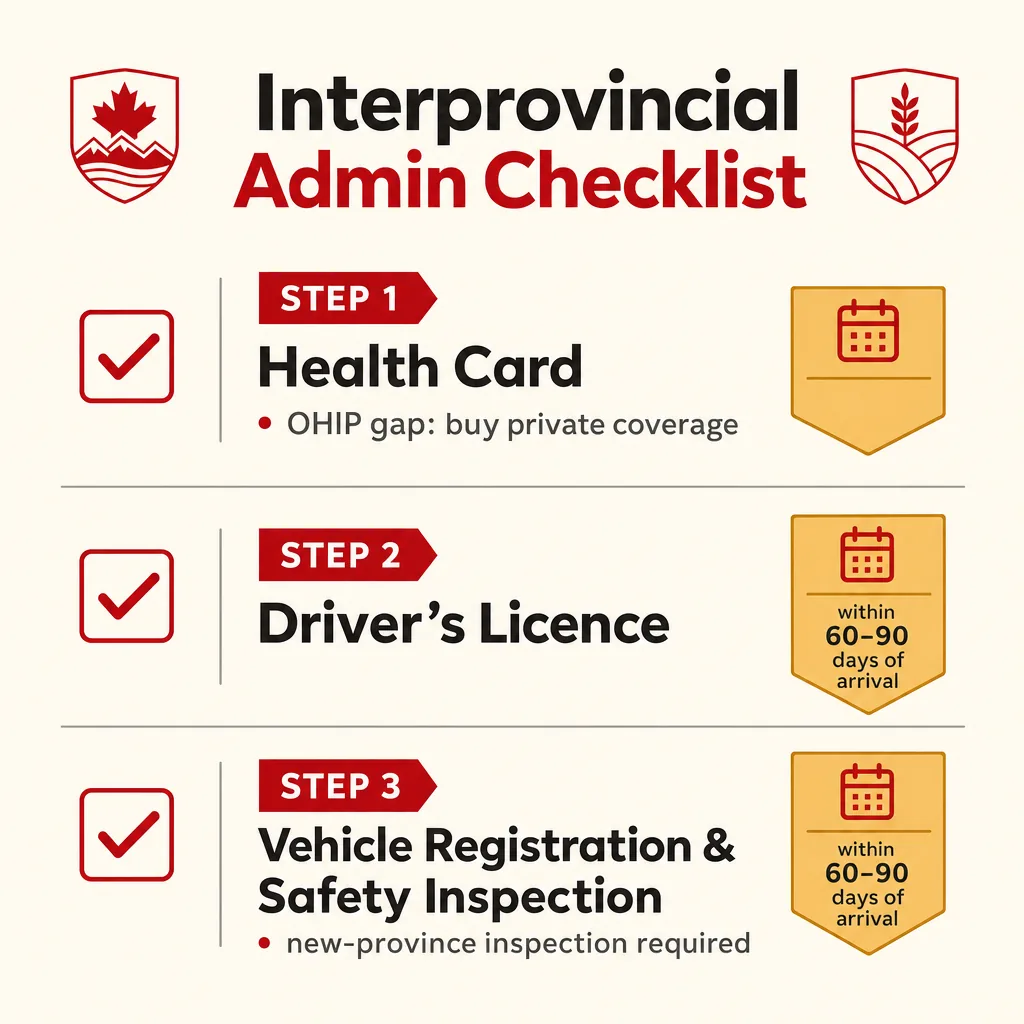
| Task | Deadline | Where to Do It | Documents Needed |
|---|---|---|---|
| Research new province’s health coverage wait period | 12 weeks before | Provincial health authority website | N/A |
| Get quotes and book movers | 8–12 weeks before | CAM directory (mover.net) | Home inventory list |
| Arrange private health insurance for gap period | 6 weeks before | Private insurer | Move date, new province |
| Notify current auto insurer | 6 weeks before | Your insurance provider | New address, move date |
| Update CRA address | 2 weeks before / after | canada.ca/change-address | SIN, new address |
| Update SIN record | First 30 days after | Service Canada | SIN card, proof of new address |
| Apply for new provincial health card | First 30 days after | Provincial health office | ID, proof of residency |
| Exchange driver’s licence | 30–90 days after | Provincial licensing office | Current licence, ID, proof of address |
| Register vehicle & get safety inspection | 30–90 days after | Provincial registry | Ownership, insurance, inspection report |
| Update Elections Canada registration | First 30 days after | elections.ca | New address |
| Update GST/HST credit & Canada Child Benefit | First 30 days after | CRA My Account | New address |
For a complete preparation guide, read how to prepare for a long distance move across provinces.
Health Card Transfers: The Gap Nobody Warns About
Ontario’s OHIP coverage has a three-month waiting period for new residents. BC’s MSP has the same. Quebec’s RAMQ can take up to three months to process. During that gap, you’re uninsured unless you buy private coverage. Don’t skip this. A single ER visit without provincial coverage can cost thousands.
Driver’s Licence and Vehicle
Ontario gives you 60 days to exchange your licence. BC and Alberta give 90 days. Most provinces waive the road test for licence holders from other Canadian provinces, but some require a knowledge test. Vehicle inspections are mandatory in many provinces — Ontario, Quebec (SAAQ), and Nova Scotia all require a safety inspection before you can register an out-of-province vehicle.
The December 31 Tax Rule
Your province of residence on December 31 determines which provincial tax rates apply for the entire calendar year. Moving from Alberta to Quebec on December 30? You just signed up for Quebec’s tax rates on all your 2026 income. Time your move accordingly if the difference matters — and between those two provinces, it’s significant.
Mover Liability and Valuation Coverage in Canada: What You Need to Know
Here’s something that catches people off guard: Canadian movers are not required to carry cargo insurance for your benefit. What you get is contractual liability — and the default level is barely worth the paper it’s printed on.
| Coverage Tier | What It Means | Typical Cost | Who It’s For |
|---|---|---|---|
| Released Value (Zero Liability) | Mover pays ~$0.60/lb per damaged article | Included (free) | Nobody, ideally |
| Declared Value | You declare total shipment value; mover liable up to that amount | ~1–2% of declared value | Most moves |
| Full/Replacement Value | Mover repairs or replaces at current market value | ~2–4% of total value | High-value households |
At released value, your $2,000 flat-screen TV that weighs 30 lbs gets you an $18 payout. That’s not a typo.
The Canadian Association of Movers recommends in their “Protect Your Move” guidelines that consumers always opt for declared or full value coverage. I’d go further: if you own antiques, electronics worth more than $1,000, or artwork, buy separate third-party transit insurance from a company like MovingInsurance.ca. Your homeowner’s or tenant’s insurance almost certainly does not cover goods in transit. Call your provider and ask before you assume it does.
For more on coverage options and packing for high-value items, see additional services by your long distance moving company.
How to Avoid Moving Scams in Canada: CAM Consumer Tips and Licensing
About 10% of the “moving company” quotes I see clients bring in for comparison aren’t from real moving companies. They’re from brokers, or worse, from outright scam operations.
Red Flags — If You See Any of These, Walk Away
- No written estimate. A legitimate mover puts it in writing. Always.
- Large cash deposit demanded upfront. Deposits over 10% before the move are a warning sign.
- Unmarked truck. Reputable carriers brand their fleet.
- No physical business address. A P.O. box and a cell number isn’t a moving company.
- Not registered with CAM. Check the Canadian Association of Movers directory at mover.net.
- Quote dramatically below competitors. If one quote is 40% cheaper than three others, it’s not a deal — it’s bait.
- Refuses in-home or video survey. They’re guessing. Or worse, they’re planning to inflate on delivery day.
The Hostage Goods Scam
This is the ugliest pattern in the industry. A crew loads your belongings, then the price doubles. They refuse to unload until you pay the inflated amount — in cash. Your entire household is locked in a truck you can’t access.
Protect yourself: get a binding estimate in writing before loading day, and pay by credit card so you have chargeback rights. The Canadian Association of Movers’ “Protect Your Move” campaign specifically warns about this tactic.
Provincial Licensing Is a Patchwork
Ontario has no provincial mover licensing requirement. Anyone with a truck can call themselves a mover. Quebec requires registration with the Commission des transports du Québec. Interprovincial carriers may also fall under federal transportation rules. This patchwork is exactly why checking the CAM directory matters — it’s often the only verification layer that exists.
Read more on vetting movers: how to find a reliable long distance moving company in canada.
How to Choose a Mover in Canada: CAM Guidelines, Binding Estimates and Verification
Picking a mover shouldn’t feel like gambling. Here’s the process that actually protects you.
- Get 3+ in-home or video estimates. Not phone estimates. Not website calculators. Real assessments of your actual stuff.
- Understand the estimate type you’re getting. See comparison below.
- Verify CAM membership. Go to mover.net, search the company name, confirm they’re a current member of the Canadian Association of Movers.
- Confirm valuation coverage level. Ask what’s included by default and what declared/full value costs.
- Read the cancellation and claims policy. Before you sign. Not after your couch arrives with a leg missing.
- Get pickup and delivery windows in writing. “Sometime next week” is not a window.
Estimate Types Compared
| Estimate Type | Price Guarantee | Risk to You | Best For |
|---|---|---|---|
| Binding | Guaranteed — you pay quoted price | Low | Budget certainty |
| Non-Binding | Can change based on actual weight | Higher | Flexible timelines |
| Not-to-Exceed | Price capped — can go lower, never higher | Lowest | Best protection overall |
8 Questions to Ask Before You Sign
- Are you a Canadian Association of Movers member?
- What valuation coverage is included in this quote?
- Is this a binding, non-binding, or not-to-exceed estimate?
- What happens if delivery is late?
- Do you subcontract any part of the move?
- What’s your claims process and timeline?
- Are there extra charges for stairs, long carries, or elevators?
- What’s your cancellation policy and deadline?
Frequently Asked Questions About Moving Between Provinces
How long do I have to change my driver’s licence when moving provinces?
It depends on the province. Ontario requires exchange within 60 days. BC and Alberta both give you 90 days. Don’t sit on this — driving with an out-of-province licence past the deadline can mean fines and insurance complications.
Do I need a new health card when I move to another province?
Yes. Apply in your new province within the first 30 days. Most provinces impose a three-month waiting period before coverage kicks in. Buy private health insurance to cover the gap. It typically costs $80–$150/month and beats a $5,000 ER bill.
Can you live in two provinces in Canada?
Technically, yes — you can own property in multiple provinces. But you can only hold one provincial health card at a time, and your province of residence on December 31 determines your tax rates for the full year. Dual residency creates complications with CRA. Get professional tax advice if this applies to you.
How to switch provinces in Canada?
The short version: update your health card, driver’s licence, vehicle registration, auto insurance, CRA address, and SIN record. See the full deadline-anchored checklist above.
How much does it cost to move from Ontario to BC?
For a 1-bedroom, expect $3,500–$5,500 in 2026. A 3-bedroom house runs $8,500–$13,000. Peak summer months add 15–25% to those numbers.
What does released value mean in Canada?
It’s the default liability level most movers include for free. The mover pays approximately $0.60 per pound per damaged item. A 50-lb dresser worth $1,200 gets you $30. It’s essentially nothing. Always upgrade to declared or full value coverage.
Is my move covered by my homeowner’s insurance?
Almost never for goods in transit. Some policies cover items in storage, but the transit itself is typically excluded. Call your insurer and confirm before assuming you’re protected.
What is the Protect Your Move program?
It’s the Canadian Association of Movers’ consumer education initiative. CAM created it to help Canadians identify legitimate movers, understand valuation coverage, and avoid scams. Their resources are available at mover.net.
The Bottom Line
The real cost of moving from province to province isn’t just freight — it’s the insurance gaps, the vehicle inspections, the health card wait periods, and the administrative deadlines that pile up behind the scenes.
- Budget 30–50% above your moving quote to cover admin, insurance, and provincial switchover costs.
- Move between September and April to avoid the 15–25% peak-season surcharge.
- Get binding estimates from at least three CAM-member movers — and never pay a large cash deposit upfront.
Ready to get a real number — not a guess? Request your free binding estimate from Motion Transport and I’ll walk you through every cost, every deadline, and every form before your boxes are even packed. Call us directly or fill out the form online. We quote what it costs and move what we quoted.
Sources & References
- Canadian Association of Movers — “Protect Your Move” consumer program, mover.net
- Canada Revenue Agency — Change your address (canada.ca)
- ServiceOntario — Health card and driver’s licence exchange requirements
- ICBC — BC driver’s licence and vehicle registration
- SAAQ / RAMQ — Quebec driver’s licence and health card transfer
- Statistics Canada — Interprovincial migration estimates, 2025–2026