We move households both ways across the border between Arizona and Canada — one truck, one crew, customs handled, no transfer. Written, flat quotes after a quick video call.
A cross-border move between Arizona and Canada involves licensing the truck to operate in both countries, declaring all goods at the port of entry, and filing the correct forms with the Canada Border Services Agency or US Customs depending on direction. Motion holds the authority to run this corridor end to end, which means one carrier handles the paperwork and the physical shipment without a hand-off.
Households moving to Canada must file a BSF186 form listing goods arriving after the owner and a BSF186A accompanying schedule for items arriving with the person. Both are submitted to the Canada Border Services Agency at the port of entry. Motion prepares these documents as part of the move so the client does not have to source the forms independently.
Used personal and household effects are generally duty-free when a person is relocating to Canada. Canadian residents returning home must show they owned and used the goods outside Canada for at least six months, qualifying under tariff item 9805.00.00. Settlers arriving in Canada for the first time are assessed under separate conditions and should confirm their eligibility before the crossing.
Toronto to Phoenix runs roughly 3,500 km via I-17 and the Ambassador Bridge at Windsor. Montreal to Phoenix is roughly 4,100 km, typically using the Lacolle-Champlain crossing south of the city. Tucson to Vancouver is roughly 2,700 km via I-5 and the Pacific Highway crossing in Surrey. These are long-haul moves that take multiple days of driving each way.
A large share of Arizona-Canada moves involve a partial household rather than a full home contents. Canadian seasonal residents often maintain two properties and move a defined set of furniture, appliances and personal effects rather than everything they own. Scoping the exact load at the video-call stage produces an accurate flat quote and avoids the cost of carrying space the client does not need.
Fill in the form beside this and a Motion specialist will text you a written flat quote after a short video call.
Arizona draws Canadian households south every winter and sends them home every spring, making it one of the busiest long-haul snowbird corridors in North America. Motion runs both directions on a single truck with a single crew: no transfer at the border, no hand-off to a second carrier. From Toronto the drive is roughly 3,500 km; from Montreal closer to 4,100 km. Customs documentation is prepared for both the Canadian Border Services Agency and US Customs at quote time.
Southbound volume peaks from August through October as Canadians set up for the winter season. Northbound picks up March through May as the same households head home. Because the lane runs both ways, Motion fills return loads rather than deadheading, which keeps scheduling practical in either direction. Partial-household moves, storage bridging, and part-year home coordination are common on this corridor and are scoped precisely at the video-call stage.
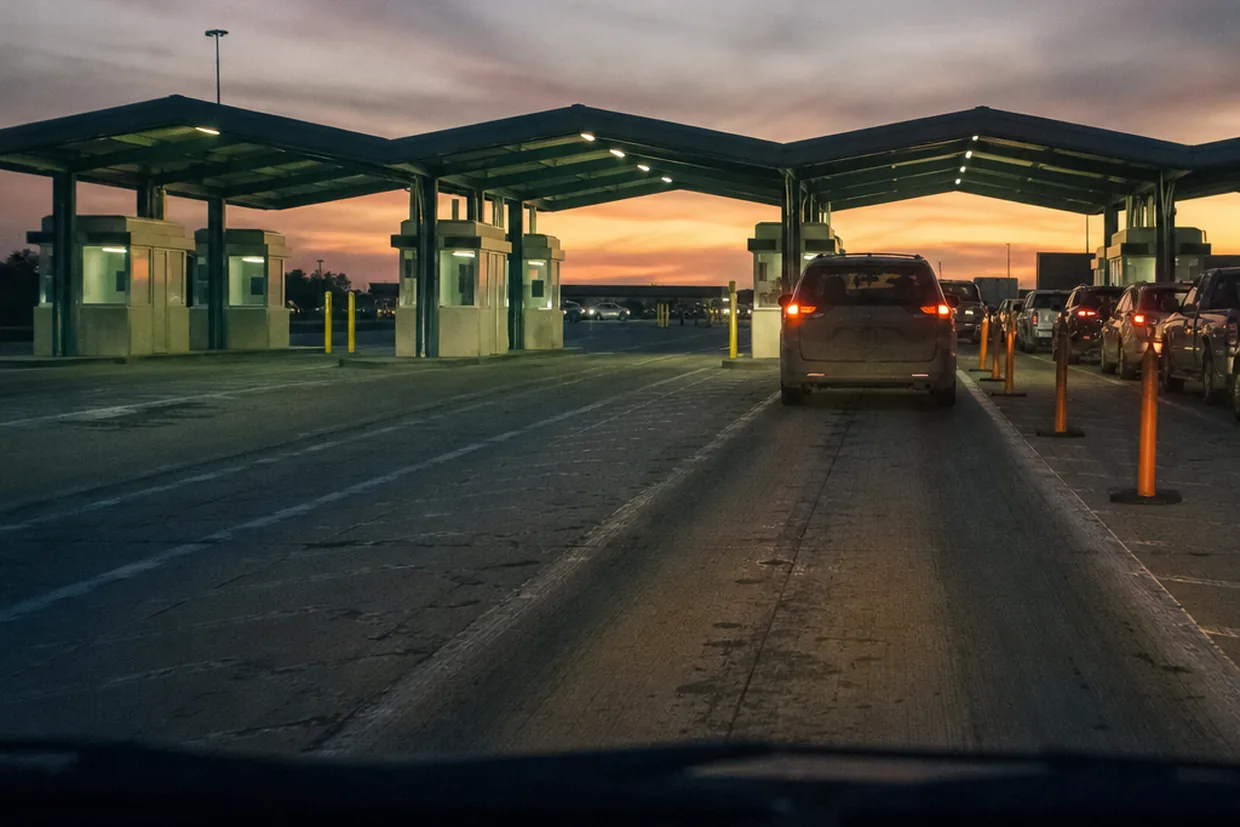
Your shipment stays on Motion’s truck from pickup to delivery with no transfer to a second carrier at the Canada-US crossing.
Motion prepares the BSF186 goods-to-follow list and BSF186A accompanying schedule for CBSA on northbound moves, and equivalent US declarations on southbound moves.
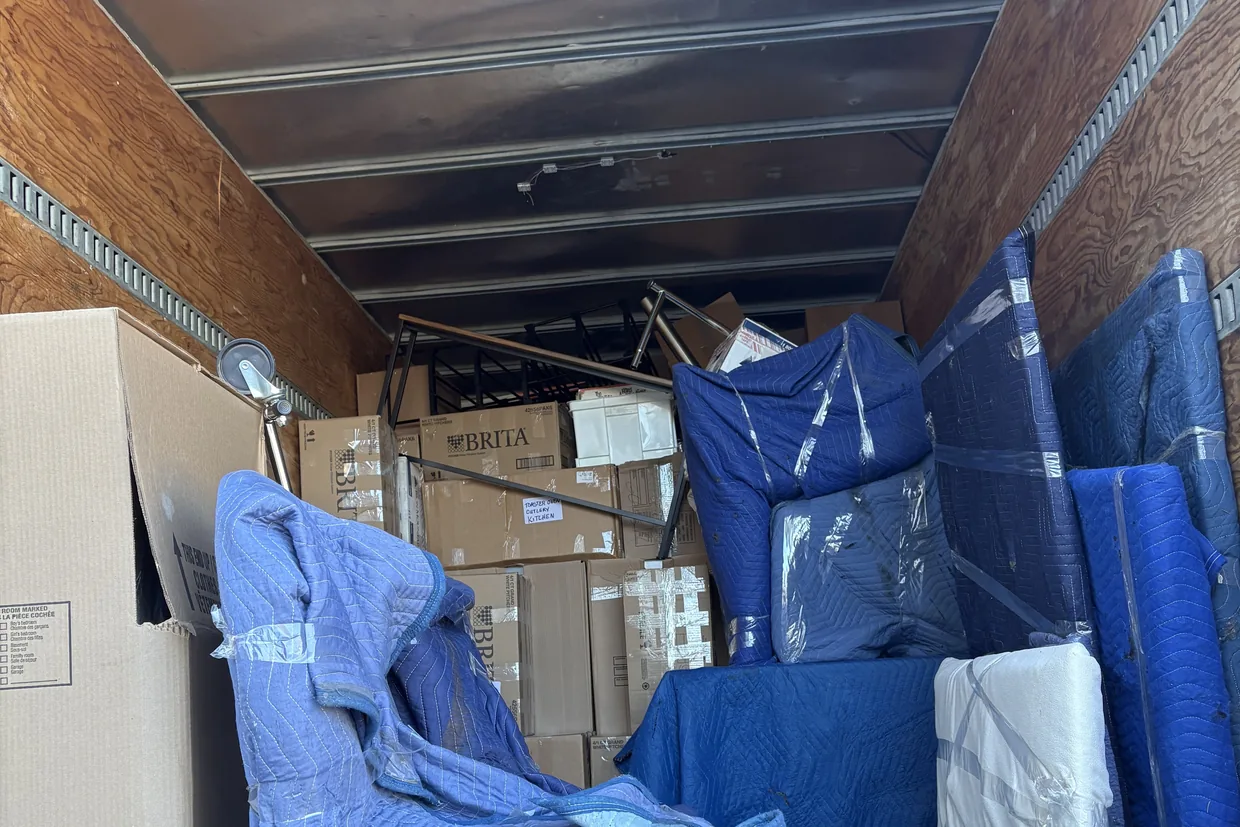
Furniture is padded and wrapped by the crew that loaded it; fragiles are packed to survive a 3,500-plus km haul on a single continuous run.
Coverage is built into your written flat quote and applies for the full distance in both countries, with no surprise add-on invoiced at delivery.
A specialist walks through your home with you on a video call, builds an accurate item list, and delivers a written flat quote before any commitment is made.

Yes, Motion runs both directions on this corridor. Southbound moves head to Phoenix, Scottsdale, Mesa and Tucson; northbound moves return to cities across Canada. Because the truck runs both ways, scheduling is practical in either direction and space is not wasted on an empty return.
Used personal and household effects are generally duty-free when you are relocating. Canadians returning home must have owned and used the goods outside Canada for at least six months under tariff item 9805.00.00. Settlers arriving for the first time are assessed under separate conditions. Motion walks you through the applicable rules at quote time.
The primary forms are the BSF186, which lists goods arriving after you, and the BSF186A, which covers goods accompanying you. Both are filed with the Canada Border Services Agency at the port of entry. Motion prepares these documents as part of the move and explains what each item declaration covers.
Southbound demand builds sharply from late summer. Booking by September is advisable for moves targeting November through January arrival in Phoenix or Scottsdale.
Actual timing depends on the specific city pair, the crossing used, customs processing time, and scheduling. Motion gives you a transit window in writing at quote time rather than a fixed delivery date.
A specialist runs a video call with you and texts a written quote before any commitment is made.