We move households both ways across the border between Virginia and Canada — one truck, one crew, customs handled, no transfer. Written, flat quotes after a quick video call.
Moving a household between Virginia and Canada means crossing an international border with a full truck of personal effects. The carrier must hold the correct cross-border operating authority, prepare customs declarations for the port of entry, and deliver without handing the load to a second operator mid-route. Motion handles all three on a single truck with one crew, both directions.
When household goods enter Canada, the importer must file a BSF186 goods-to-follow list and, where goods travel with the person, a BSF186A accompanying-goods list. Both forms are submitted to the Canada Border Services Agency at the port of entry. Motion prepares these documents as part of the move. The importer reviews and signs before the truck crosses.
Used personal and household effects are generally duty-free when a person relocates to Canada. Settlers bringing goods for the first time are assessed under settler conditions. Returning Canadian residents must demonstrate that goods were owned and used outside Canada for a minimum of six months, qualifying under tariff item 9805.00.00. Neither exemption is automatic; correct documentation is required at the crossing.
Virginia extends from the dense suburbs of Northern Virginia and Arlington through Richmond to the Hampton Roads coast. Depending on the Canadian destination, moves from Virginia travel 550 to 900 miles and cross at the Peace Bridge at Fort Erie, the Ambassador Bridge between Detroit and Windsor, or the Lacolle-Champlain crossing south of Montreal.
Government transfers, military relocations, and private household moves keep the Virginia to Canada corridor active in both directions. Motion operates the same truck and crew from origin to destination without a carrier transfer at the border. Northbound and southbound loads are coordinated so capacity is used on both legs, which supports scheduling and availability for customers moving either direction.
Use the form beside this to send your move details and a specialist will text a written quote within minutes.
Virginia sits roughly 600 to 900 miles from the main Canadian border crossings, depending on your origin. Motion runs households both ways on a single truck, from Arlington and Alexandria through Richmond and down to Virginia Beach and Norfolk. The same crew loads in Virginia, crosses into Canada, and delivers without handing your shipment to a second carrier at the border. Customs paperwork is prepared and filed on your behalf at the port of entry, each direction.
Government transfers, military relocations, and tech-sector moves keep this corridor active in both directions throughout the year.
Your shipment stays on one Motion truck from Virginia to the Canadian destination, with no transfer to a second carrier at the border crossing.
Motion prepares and files the BSF186 and BSF186A forms with Canada Border Services Agency at the port of entry, both directions.
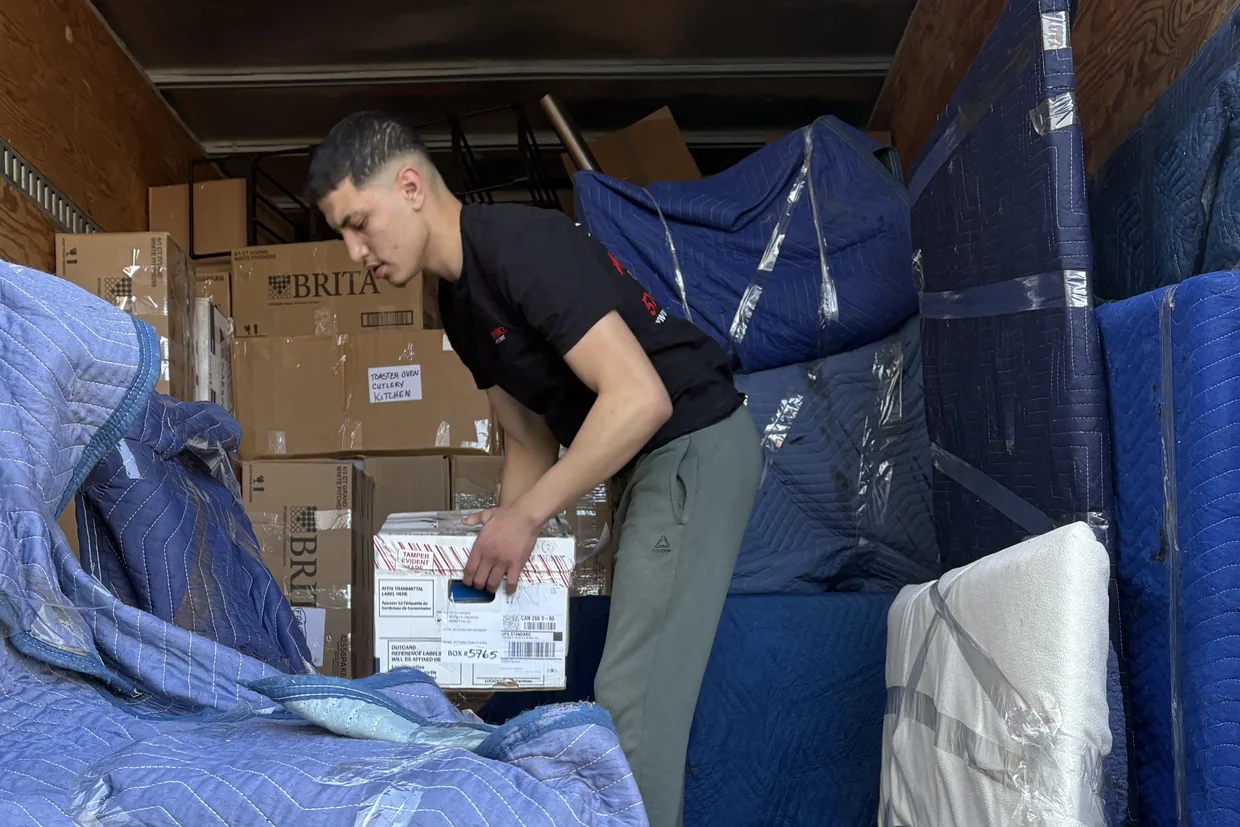
Furniture is padded and wrapped, fragile items boxed and labelled, and the load secured before the truck moves.
Coverage is built into the written quote issued after your video-call assessment. No separate insurance invoice is added after booking.
A specialist conducts the inventory over video, produces a written flat-rate quote, and confirms a delivery window before any commitment is required.
Yes, Motion runs both directions on this corridor. Northbound and southbound loads are coordinated so the truck is not returning empty, which keeps the operation efficient for customers moving either way.
Used personal and household effects are generally duty-free when relocating to Canada. Settlers bringing goods for the first time file under settler conditions, while returning residents must show goods were owned and used abroad for at least six months under tariff item 9805.00.00.
It depends on the Canadian destination. Toronto and Hamilton moves commonly use the Peace Bridge at Fort Erie. Ottawa and Montreal moves typically cross at Lacolle-Champlain. Windsor-bound loads use the Ambassador Bridge. Motion selects the crossing that best fits the route.
Motion confirms a delivery window in the written quote so you have a working timeline before committing.
Yes. Motion handles gate access requests for military installations and elevator and loading-dock bookings for high-rise buildings in Northern Virginia and Hampton Roads before load day, so there are no delays on move day.
A specialist reviews your inventory on a video call and texts a flat written quote within minutes.