We move households both ways across the border between California and Canada — one truck, one crew, customs handled, no transfer. Written, flat quotes after a quick video call.
A California to Canada move crosses an international border on a haul of 1,500 km to over 4,600 km depending on origin and destination. The carrier must hold the correct operating authority for both countries, prepare customs documentation for the Canada Border Services Agency or US CBP, and declare all goods at the port of entry. Motion handles licensing, manifests and border forms as part of the move.
Movers arriving in Canada from California must file the BSF186 goods-to-follow list for any items not travelling with them, and the BSF186A accompanying-goods list for items arriving at the same time. Both forms are submitted to the Canada Border Services Agency at the port of entry. Motion prepares these documents as part of every Canada-bound move.
Used personal and household effects imported into Canada are generally duty-free when a person is relocating. Returning Canadian residents must demonstrate the goods were owned and used abroad for at least six months to qualify under tariff item 9805.00.00. Settlers importing goods into Canada for the first time are assessed under separate settler conditions. Neither exemption is automatic; documentation is required at the border.
Motion Transport operates under carrier authority in both Canada and the United States, meaning the same truck and crew complete the full California to Canada haul without transferring goods to a second carrier at the border. Re-handling at interchange points is a common source of damage and delay on long-distance cross-border moves. The single-carrier model eliminates that step on every load.
Los Angeles to Toronto is roughly 4,000 km, making it one of the longest regularly served cross-border household moving corridors in North America. Los Angeles to Montreal is roughly 4,600 km. San Francisco to Vancouver is roughly 1,500 km via I-5 north and the Pacific Highway crossing at Surrey, BC. Each corridor uses a different primary border crossing and a different customs port of entry.
Fill in the form beside this to reach a specialist who will walk through your California move on a video call and send a flat written quote.
Motion Transport runs household moves between California and Canada in both directions on a single truck with one crew. Los Angeles sits roughly 4,000 km from Toronto and about 4,600 km from Montreal, making this our longest mainland corridor. Because your goods never transfer to a second carrier at the border crossing, there is no re-handling at interchange points and no second carrier’s schedule to accommodate. Customs paperwork is prepared for you in both directions.
That two-direction freight economy is part of how Motion keeps a truck on this corridor consistently rather than repositioning empty. Whether you are relocating from San Francisco to Vancouver or from Toronto to San Diego, the same model applies.
Motion prepares the BSF186 goods-to-follow list and BSF186A accompanying list for Canadian customs, and the equivalent US CBP paperwork for southbound moves.
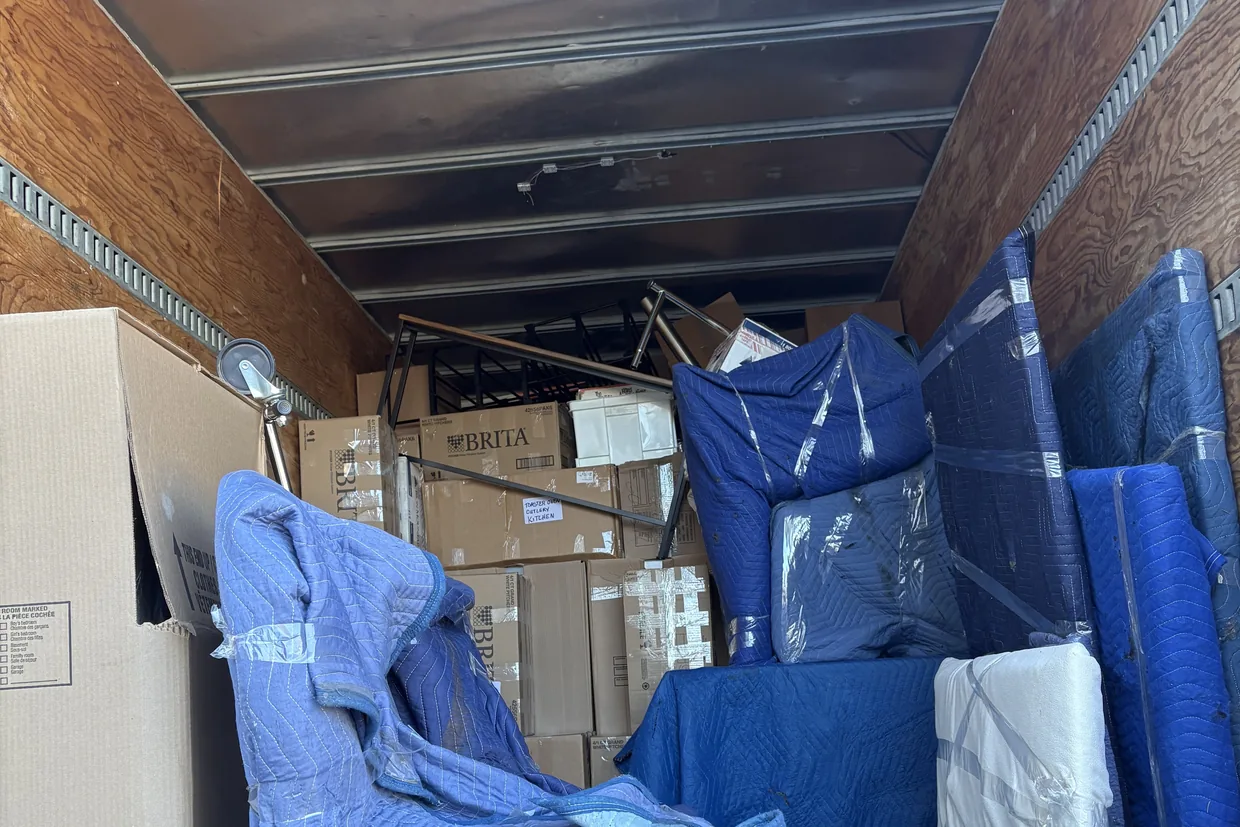
Your goods stay on one truck with one crew from pickup to delivery. Nothing is handed to a second carrier at the border, so there is no re-handling and no second carrier’s schedule to manage.
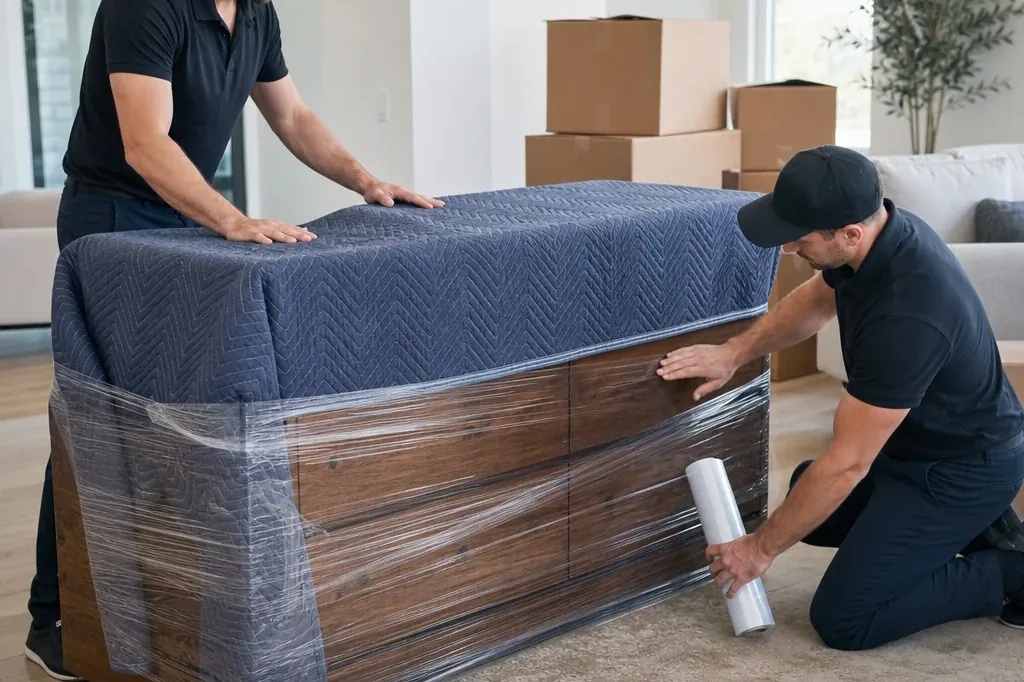
Professional wrapping, padding and blanket protection for furniture, fragiles and high-value items across a multi-day coast-to-coast haul.
Cargo-liability insurance is built into your written quote. There are no surprise add-on fees for coverage declared after the booking.
A specialist inventories your load on a video call and issues a flat written quote. No in-person visit is needed when one end of the move is thousands of kilometres away.

Yes, both directions on one carrier. Motion runs southbound and northbound loads on the California corridor consistently. Customs paperwork is handled in either direction, whether you are moving a household from Los Angeles to Toronto or from Vancouver to San Diego.
Used personal and household effects are generally duty-free when relocating to Canada. Settlers importing goods for the first time file under settler conditions, while returning Canadian residents must show the goods were owned and used abroad for at least six months under tariff item 9805.00.00. Conditions vary; confirm with the CBSA.
Movers arriving in Canada file the BSF186 goods-to-follow list for items not yet in Canada, and the BSF186A accompanying-goods list for items arriving with you. Both are filed with the Canada Border Services Agency at the port of entry. Motion prepares these forms as part of the move.
Motion quotes a realistic multi-day window that accounts for border crossing time rather than a single delivery date it cannot guarantee.
San Francisco and Sacramento loads into BC typically use Pacific Highway at Surrey. Ontario-bound loads often use the Ambassador Bridge at Windsor or the Peace Bridge at Fort Erie. Alberta-bound loads may use Coutts-Sweetgrass.
A specialist texts you a flat written quote after a short video-call walkthrough.