We move households both ways across the border between New York and Canada — one truck, one crew, customs handled, no transfer. Written, flat quotes after a quick video call.
Moving between New York and Canada means clearing a federal border in either direction, declaring goods with the Canada Border Services Agency or US Customs and Border Protection, and filing the correct forms before the truck reaches the port of entry. Motion handles the manifest preparation so you are not sourcing a customs broker separately, and your goods stay on one truck the entire way.
Household goods entering Canada must be declared using the BSF186 goods-to-follow list and the BSF186A accompanying goods list, both filed with the Canada Border Services Agency at the port of entry. Motion prepares these documents from your inventory before the move date. Errors or omissions on the manifest can delay release of your goods at the crossing, so accuracy at this stage matters.
Used personal and household effects are generally duty-free when a person is genuinely relocating. Settlers bringing goods to Canada for the first time and returning Canadian residents who owned and used their goods abroad for at least six months both have pathways to duty-free entry, with returning residents assessed under tariff item 9805.00.00. Conditions differ between the two categories and a Canada Border Services Agency officer makes the final determination at the port of entry.
Most long-distance cross-border moves involve a transfer between a US carrier and a Canadian carrier at the border, which means a second inventory count, a second crew and a second point of liability. Motion operates the full route with one truck and one crew, so the chain of custody is unbroken from pickup to delivery and there is no cross-dock delay mid-move.
Co-ops, condominiums and high-rise rentals in New York City typically require a certificate of insurance naming the building as an additional insured, a reserved loading dock and a booked elevator window before a move can proceed. Motion files the COI and coordinates these bookings directly with building management, which prevents the move date from being delayed by unresolved access paperwork.
Fill in the form beside this and a Motion specialist will reach out to book your video-call assessment.
New York is one of the shortest cross-border corridors Motion runs. Toronto to New York City is roughly 800 kilometres and Montreal to New York is closer to 600, so many moves complete within a tight scheduling window. Motion serves the five boroughs, Long Island, Westchester, and upstate hubs including Buffalo, Rochester and Albany, handling customs documentation in both directions so nothing is handed off at the border.
Whether you are relocating a family, returning to Canada, or moving a student, the same single-carrier service applies in either direction.

Your goods travel on one truck with one crew from pickup to delivery, with no transfer to a second carrier at the border crossing.
Motion prepares the goods-to-follow manifest and accompanying lists for Canadian or US customs at the port of entry, filed on your behalf.
Certificate-of-insurance filings, loading-dock reservations and elevator windows for NYC co-ops and high-rises are arranged directly by the Motion team.
Furniture is padded and wrapped by the crew before loading. Fragile items are packed to withstand a cross-border run without repacking at the border.
Coverage is built into your written quote and applies for the full journey in both directions, with no separate policy to purchase or broker to contact.
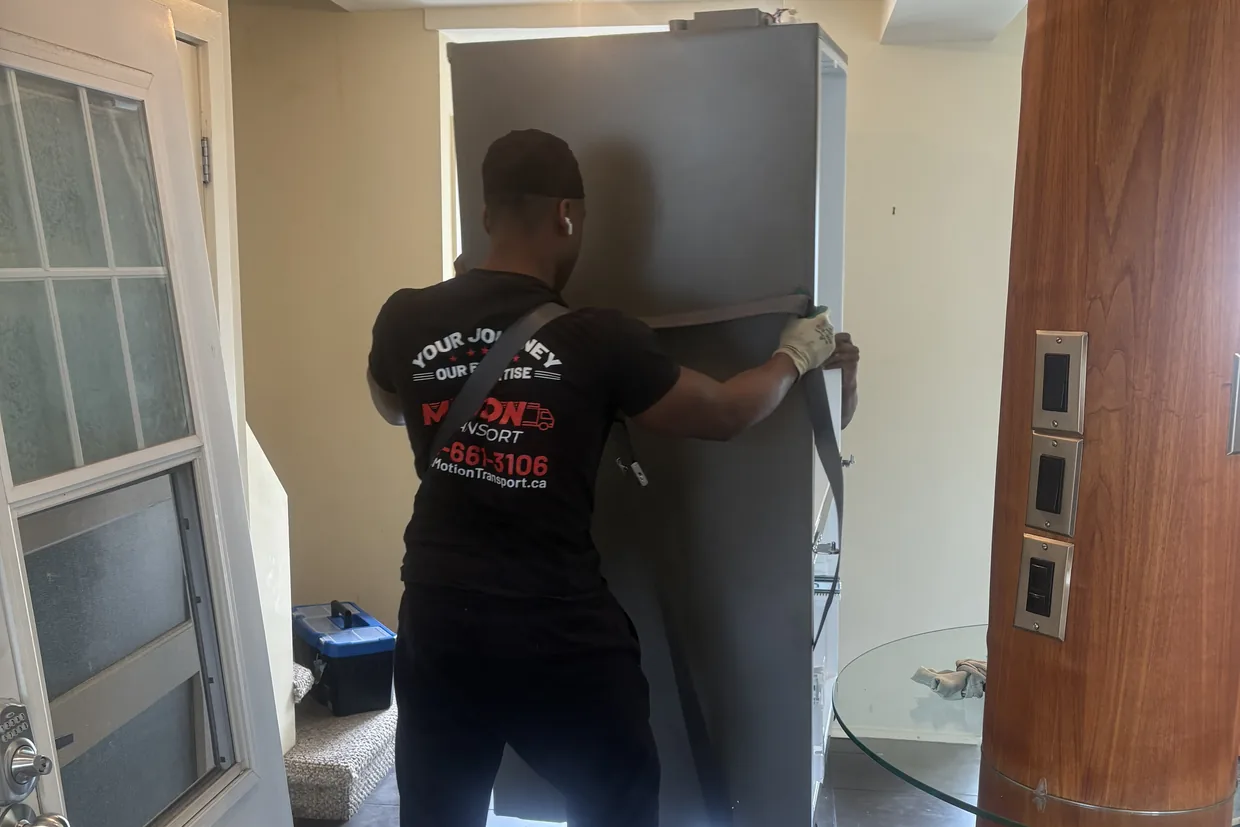

Yes. Motion runs both directions on every corridor and handles customs in either direction. Whether you are relocating from Toronto to Manhattan or from Albany to Ottawa, the same single-carrier, customs-included service applies.
Used personal and household effects are generally duty-free when you are relocating. Settlers moving to Canada for the first time and returning residents who owned and used goods abroad for at least six months under tariff item 9805.00.00 qualify, though conditions differ. A customs officer makes the final determination at the port of entry.
It depends on your origin and destination. Moves through Buffalo typically use the Peace Bridge at Fort Erie. NYC-to-Montreal moves generally cross at Lacolle-Champlain on I-87. Niagara-area moves often use the Queenston-Lewiston Bridge. Motion selects the crossing that fits your route.
Actual timing depends on inventory size, building access requirements and border wait times on the day of crossing.
Motion prepares the BSF186 goods-to-follow list and the BSF186A accompanying goods list, both filed with the Canada Border Services Agency at the port of entry. You will need to provide a detailed inventory of your belongings before the move date so the manifest is accurate.
A specialist reviews your inventory on a short video call and sends a flat written quote.