Miami to Montreal is a snowbird and relocation corridor we run all winter — one truck, customs handled, door to door with no transfer. Roughly ~2,500 km of driving.
Moving between Miami and Montreal means crossing an international border with a full household shipment. The carrier must be licensed for cross-border transport, the goods must be declared to Canada Border Services Agency at the port of entry, and the correct forms must be filed before customs clearance is granted. Motion handles licensing, documentation, and the crossing on a single truck.
Household goods entering Canada must be declared using CBSA form BSF186 for goods arriving after the owner and BSF186A for goods accompanying the owner at the border. Both forms are filed at the port of entry, in this corridor at Lacolle-Champlain on the Quebec border. Items not listed on the BSF186 at the time of entry cannot later be claimed duty-free, so a complete and accurate inventory before the truck departs Miami is essential.
Used personal and household effects are generally duty-free when a person is relocating to Canada, but the conditions differ by situation. Canadian residents returning from abroad must show that the goods were owned and used outside Canada for a minimum of six months to qualify under tariff item 9805.00.00. Settlers arriving for the first time are assessed under a separate set of conditions. Neither category covers goods purchased for the move or commercial shipments.
The standard port of entry for a Miami to Montreal truck move is Lacolle-Champlain on the Quebec border, where Autoroute 15 feeds directly from I-87 in New York state. CBSA officers at this crossing process household goods shipments and review the carrier manifest and BSF186 documentation. Wait times vary and can affect the overall transit window, which is why Motion treats the transit estimate as a ballpark rather than a guaranteed delivery date.
Cross-border household moves that use two carriers, one for the US leg and a second for the Canadian leg, create a handoff at the border where goods change trucks and responsibility is transferred between operators. That transfer point is where delays and damage most commonly occur. Motion Transport operates one truck from Miami to Montreal under a single carrier authority, so the shipment never leaves its custody between loading and final delivery.
Fill in the short form beside this text and a Motion specialist will reach out within five minutes to arrange your video-call inventory review.
Motion Transport runs the Miami to Montreal corridor as a direct cross-border service. Your belongings are loaded once in Miami, stay on the same truck with the same crew for the full roughly 2,500 km, and are delivered in Montreal without any transfer to a second carrier at the border. Customs documentation for the Canadian crossing is prepared by Motion’s team, so you are not navigating CBSA paperwork on your own. A flat written quote follows a short video-call walkthrough.
This corridor runs heavily southbound in autumn as Montreal residents head to Florida for winter, and northbound in spring as snowbirds return and families relocate before the school year. Motion fills trucks in both directions, which keeps the schedule tight and avoids the empty-leg problem that inflates rates on one-way-only operators.
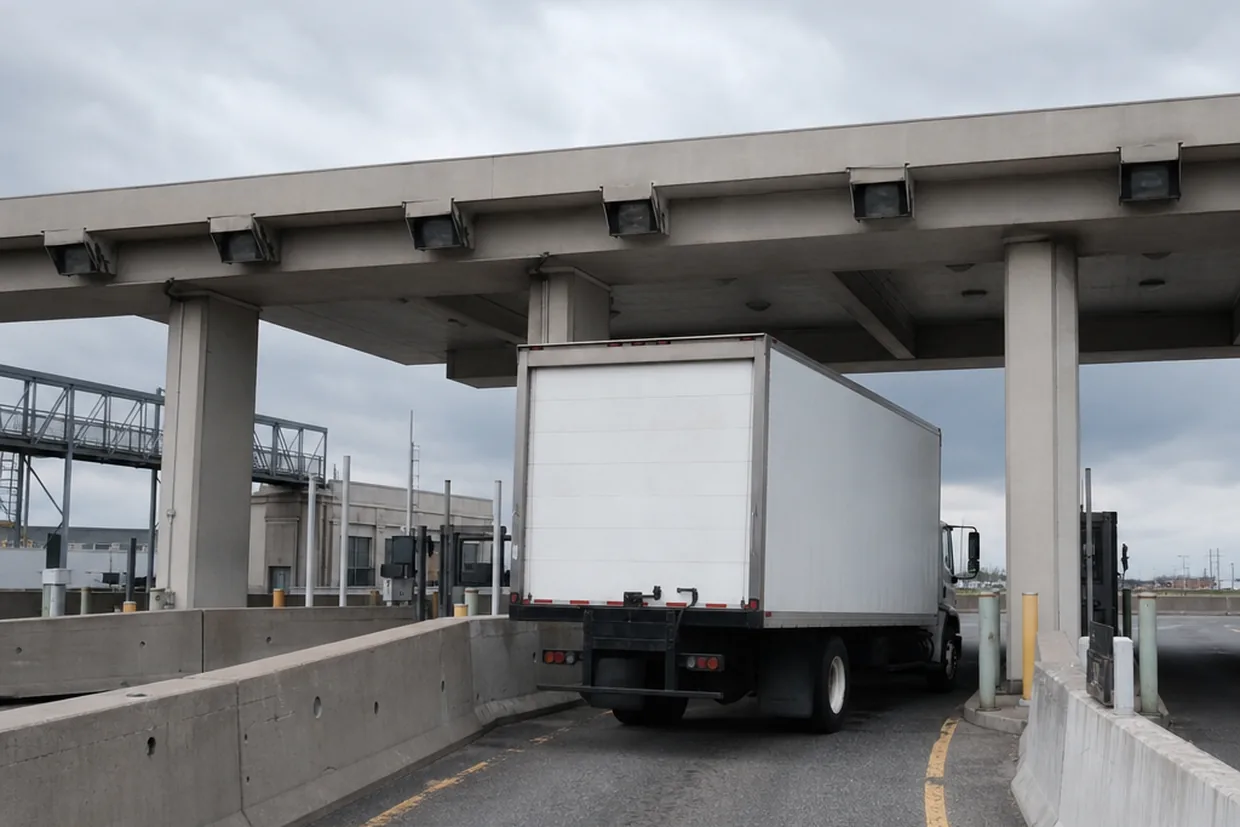
Motion prepares the CBSA manifest, BSF186 goods-to-follow list, and accompanying schedules filed at the Lacolle-Champlain port of entry.
Your shipment stays on one truck with one crew from Miami to Montreal. Nothing is offloaded at the border and handed to a second operator.
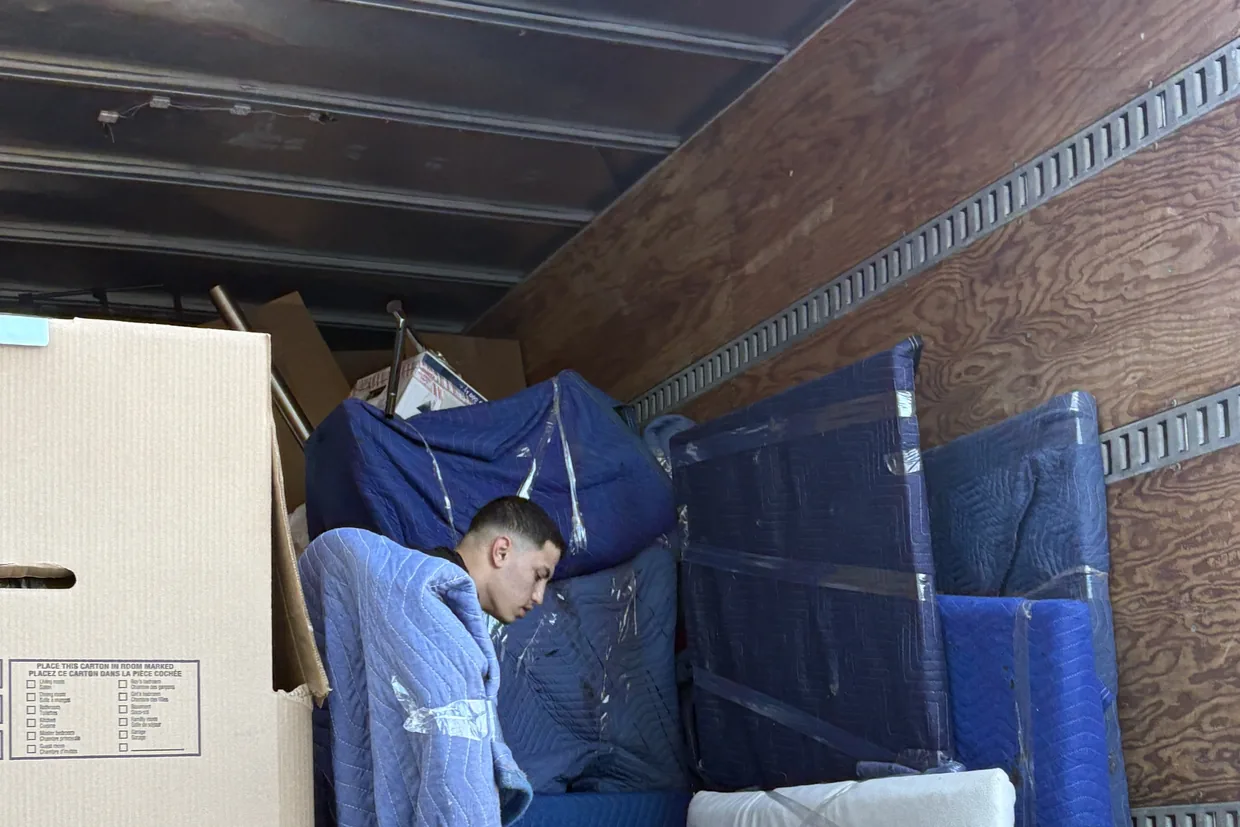
Furniture is padded and wrapped at origin. Fragile items are packed to transport standards before the truck leaves Miami.
Coverage is built into the written quote. There are no surprise add-on fees for basic protection in transit across the border.
If your Montreal move-in date shifts, Motion holds your shipment at its Montreal or Toronto facility without a full reload.

Actual timing depends on load consolidation, border wait times at Lacolle-Champlain, and your specific delivery window. Motion provides a firm estimated delivery range in the written quote.
Used personal and household effects are generally duty-free when relocating to Canada. Settlers bringing goods for the first time file under settler conditions; returning Canadian residents must show the goods were owned and used abroad for at least six months under tariff item 9805.00.00. Motion handles the paperwork but your eligibility depends on your own residency status.
No. Motion operates one truck end to end. Your goods load in Miami and unload in Montreal on the same vehicle with the same crew. There is no transfer at Lacolle-Champlain or anywhere else along the route.
Yes. Motion runs this corridor in both directions. The southbound run in autumn and the northbound run in spring both operate as full one-carrier services with customs handled at the Lacolle-Champlain crossing.
Motion prepares the manifest; you confirm the inventory is complete before the truck crosses.
A specialist reviews your inventory on a short video call and sends a flat, itemised quote.