Miami to Toronto is a snowbird and relocation corridor we run all winter — one truck, customs handled, door to door with no transfer. Roughly ~2,400 km of driving.
A Miami to Toronto move is a federally regulated cross-border shipment, not a domestic relocation. The carrier must be licensed to operate in both countries, goods must be declared at a designated port of entry, and the household must file the correct Canadian customs forms with the Canada Border Services Agency. Motion handles the paperwork and runs the truck in both directions on one operating authority.
Anyone moving household goods into Canada must file a BSF186 goods-to-follow list and, where goods accompany the shipment, a BSF186A accompanying goods list with the Canada Border Services Agency at the port of entry. Both forms require an itemised inventory of every article being imported. Incomplete or inaccurate lists can result in holds at the crossing. Motion prepares both documents as part of the move, using the inventory built during the pre-move video-call assessment.
Used personal and household effects are generally duty-free when a person is genuinely relocating to Canada, but the conditions differ depending on residency status. Returning Canadian residents claiming the exemption must have owned and used the goods outside Canada for a minimum of six months, assessed under tariff item 9805.00.00 of the Canadian Customs Tariff. Settlers arriving in Canada for the first time are assessed under separate provisions. Neither exemption is automatic and both require correct declaration at the port of entry.
Miami to Toronto shipments typically cross into Canada at either the Ambassador Bridge between Windsor, Ontario and Detroit, Michigan, or the Peace Bridge between Fort Erie, Ontario and Buffalo, New York. The Ambassador Bridge carries the highest volume of commercial cross-border traffic on the continent. The Peace Bridge route places a Toronto-bound truck directly on the Queen Elizabeth Way. Crossing choice depends on final delivery address and estimated wait times on the crossing date.
Motion is licensed to move household goods in both the United States and Canada and operates the Miami to Toronto corridor in each direction. Southbound volume is concentrated among Toronto-area households relocating or returning to Florida properties through the winter months. Northbound volume peaks in late spring and summer. Running both directions on the same operating authority means there is no handoff to a second carrier at the border in either direction, which eliminates the most common point of delay and liability transfer in cross-border household moving.
Fill in the short form and a Motion specialist texts you back in five minutes with next steps for your Miami to Toronto quote.
A Miami to Toronto move covers roughly 2,400 kilometres of road, crossing from the United States into Ontario at the Peace Bridge between Buffalo and Fort Erie or the Ambassador Bridge between Detroit and Windsor, depending on routing. Motion loads your household goods in Miami on one truck, clears customs at the port of entry, and delivers to your Toronto address without ever transferring to a second carrier. That single chain of custody is where most cross-border delays and damage claims are avoided.
This corridor runs heavily southbound through the winter months as Toronto-area snowbirds return to Florida properties, and northbound in late spring and summer as those same households relocate back to Ontario. Because Motion fills trucks in both directions, the economics work without forcing you onto a one-way premium.
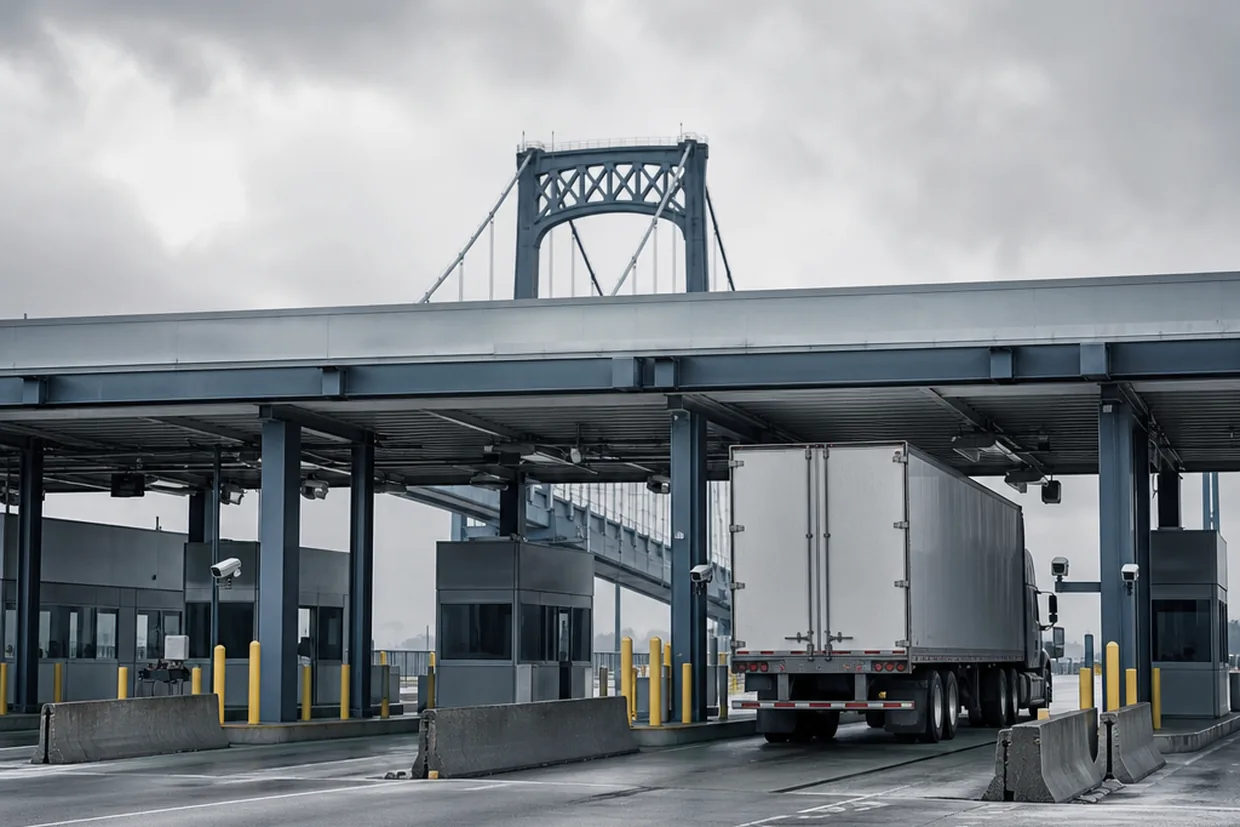
Your goods stay on the same Motion truck from Miami to Toronto. There is no handoff to a Canadian carrier at the border, which is where most cross-border damage and delay claims originate.
Motion prepares the BSF186 goods-to-follow list and BSF186A accompanying goods list filed with Canada Border Services Agency at the port of entry, and handles the equivalent US export paperwork on the southbound direction.
Furniture is wrapped and padded by the same crew that loads and delivers. Fragile items are packed to a standard that survives a 2,400-kilometre road haul, not a local move.
Cover is built into your written flat quote. There are no surprise brokerage fees or border-related add-ons disclosed after the fact.
If your move-in date shifts after the truck is loaded, your shipment can be held at a Motion hub and delivered when your Toronto address is ready, without returning the goods to Miami.
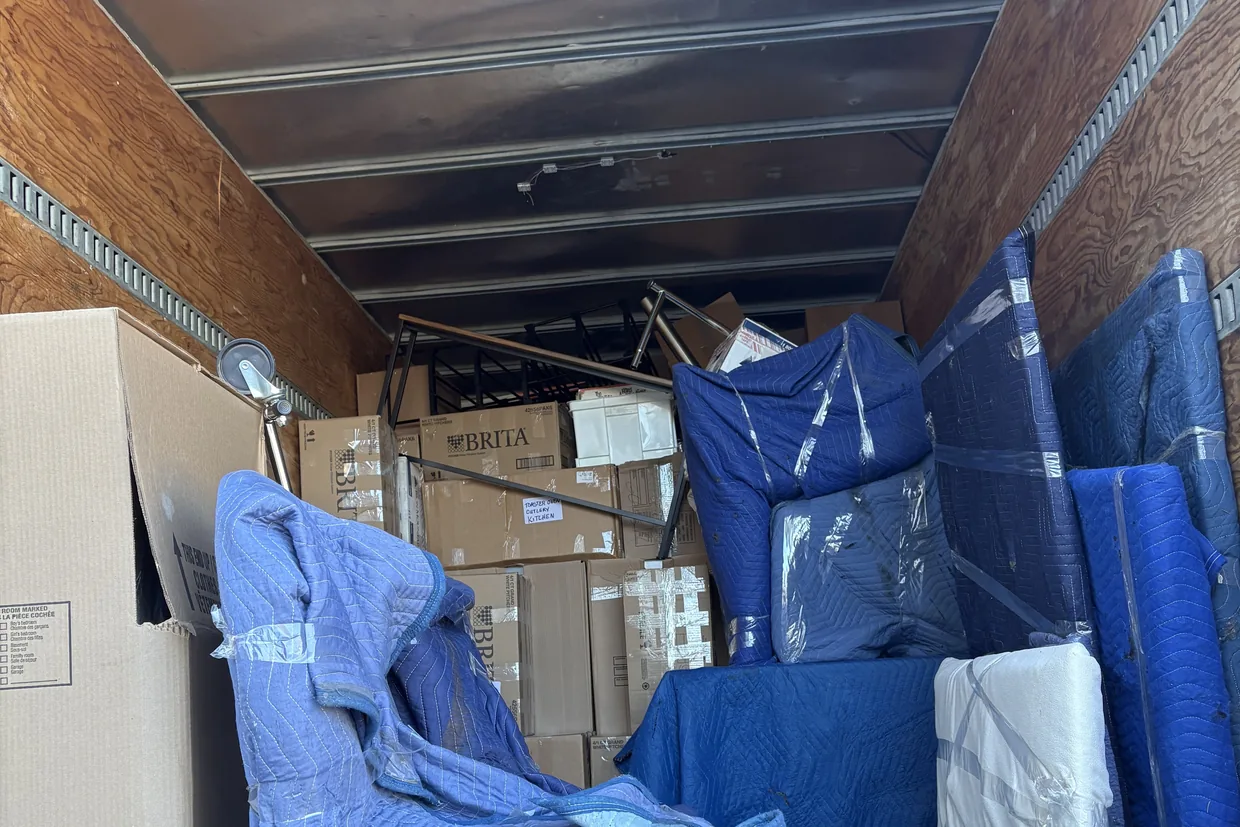

The drive alone is roughly 2,400 km, and border processing at the Ambassador or Peace Bridge adds time that varies by crossing date and volume. A firm estimated delivery window goes into your written quote before we load.
No. Motion operates one carrier end to end, which means the same truck and crew that picks up in Miami crosses into Canada and delivers in Toronto. There is no transfer to a Canadian carrier at the border, which is the most common point of delay and damage in cross-border moving.
Used personal and household effects are generally duty-free when relocating to Canada. Returning Canadian residents must have owned and used the goods outside Canada for at least six months under tariff item 9805.00.00. First-time settlers are assessed under different conditions. Motion handles the paperwork, but your coordinator needs to know which category applies to you.
Motion prepares the BSF186 goods-to-follow list and the BSF186A accompanying goods list, both filed with the Canada Border Services Agency at the port of entry. These require an itemised inventory, which is why the video-call walkthrough of your Miami home is part of the process before we write your quote.
Yes. Motion runs this corridor in both directions. Toronto to Miami uses the same one-carrier, customs-handled service, and filling the truck on the return trip means you are not paying a one-way rate built around an empty southbound run.
A short video-call walkthrough of your Miami home is all it takes to get a flat, written number.