Houston to Toronto is a long-haul run to the Gulf Coast — one truck, customs handled, door to door with no transfer. Roughly ~2,900 km of driving.
A Houston to Toronto move crosses one international border, covers roughly 2,900 kilometres, and requires customs declarations filed with the Canada Border Services Agency at the port of entry. Motion Transport loads at the Houston address, drives the full corridor on a single truck, and delivers to the Toronto door without transferring the shipment to a second carrier. Customs documents are prepared by Motion and filed at the crossing.
Household goods entering Canada from the United States must be declared to the Canada Border Services Agency at the port of entry. The primary forms are the BSF186, which lists goods following the owner after the move, and the BSF186A, which lists goods accompanying the owner at the time of crossing. Both must be accurate and complete before goods are released into Canada.
Used personal and household effects are generally duty-free when a person is relocating to Canada. Returning Canadian residents must have owned and used the goods outside Canada for at least six months to qualify under tariff item 9805.00.00. Settlers arriving in Canada for the first time are assessed under separate CBSA conditions and should confirm eligibility before the move date.
Most cross-border household moves involve a handoff from a US carrier to a Canadian carrier at or near the border. That transfer point is where goods are most frequently delayed, misrouted, or damaged. A single-carrier model, where one truck and crew handle both the US and Canadian legs, eliminates the transfer and keeps the shipment in an unbroken chain of custody from Houston to Toronto.
The most direct crossing for a Houston to Toronto move is the Ambassador Bridge connecting Windsor, Ontario to Detroit, Michigan, reached via I-69 or I-45 north through the US Midwest. An alternative crossing is the Blue Water Bridge at Sarnia, Ontario, reached via I-94, which suits deliveries in western Ontario. The chosen crossing is confirmed during the quote process based on the Toronto delivery address.
Use the form beside this page to start your Houston to Toronto quote. A specialist responds within five minutes.
Moving from Houston to Toronto covers roughly 2,900 kilometres and crosses an international border, which means customs declarations, a Canada Border Services Agency port of entry, and paperwork that has to be correct before your goods roll into Ontario. Motion runs this corridor with a single truck and crew the whole way, loading at your Houston address and delivering to your Toronto door without a transfer to a second carrier at any point, Canadian or American.
Traffic on this lane runs both ways. Trucks heading north from Texas carry household shipments into Ontario; the same equipment repositions south on the return, which means space on the southbound Toronto-to-Houston leg is filled rather than deadheaded. Customers moving in either direction benefit from the same flat written quote, the same crew continuity, and the same border paperwork process handled by Motion.
Motion prepares the BSF186 goods-to-follow manifest and BSF186A accompanying-goods list filed with CBSA at the port of entry, both directions.
Your shipment stays on one truck with one crew from your Houston address to your Toronto door. No transfer to a second carrier at the border, no broken chain of custody.
Furniture is padded and wrapped, fragile items are packed to transit standard, and nothing is rehandled at an intermediate depot on this corridor.
Coverage is written into your flat quote. There are no border surcharges, brokerage fees, or insurance add-ons invoiced separately at delivery.
If your move-in date shifts after the truck is loaded, Motion holds your shipment at its Toronto facility until the address is ready, without requiring a second delivery booking.
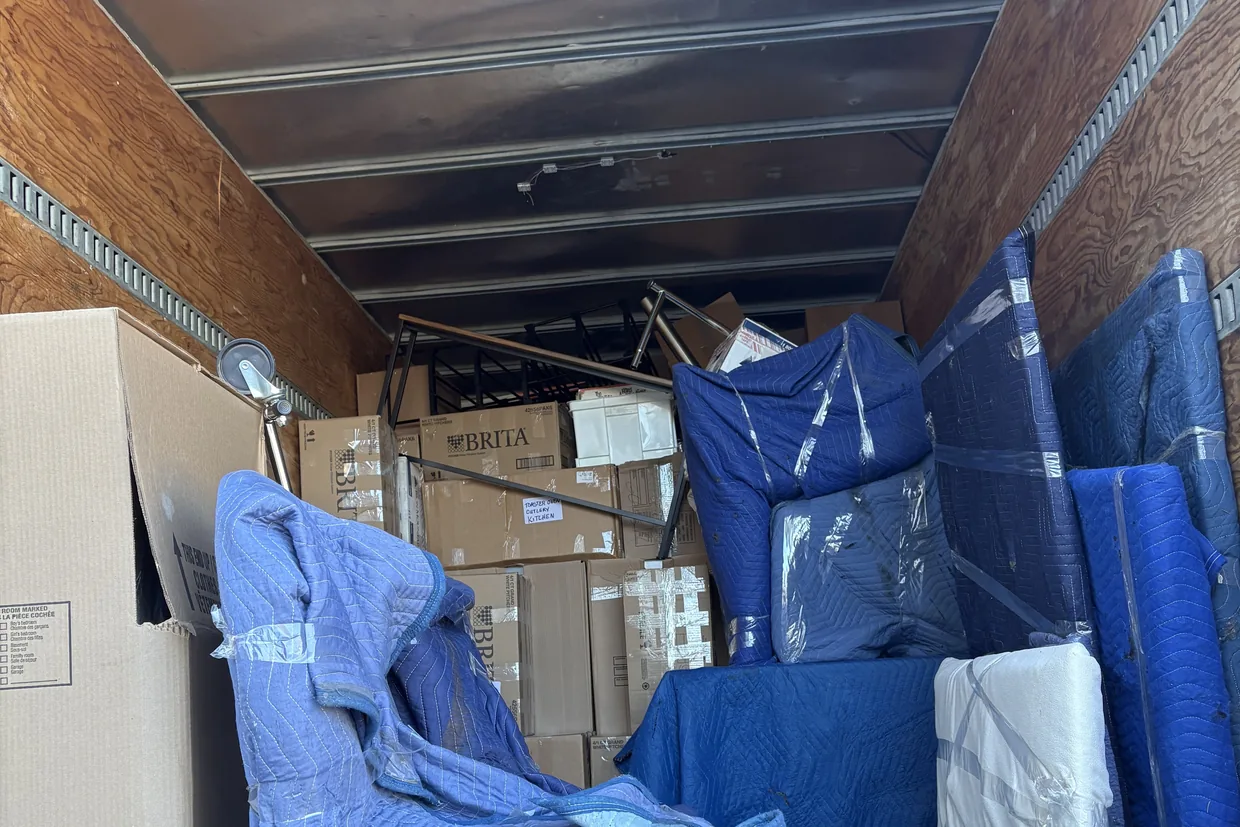
The exact window depends on load date, border wait times at the crossing, and your delivery address in the GTA. Motion provides a firm delivery window in your written quote and calls with an updated ETA once the truck is rolling north.
You need a BSF186 goods-to-follow list or a BSF186A accompanying-goods list filed with the Canada Border Services Agency at the port of entry. Motion prepares both documents from the video-call inventory. You review and sign; Motion handles the filing at the crossing.
Used personal and household effects are generally duty-free when relocating to Canada. Returning Canadian residents must have owned and used the goods outside Canada for at least six months under tariff item 9805.00.00. First-time settlers are assessed under different CBSA conditions. Motion outlines your specific position during the quote call.
No. One truck and one crew handle the move from Houston to Toronto. There is no transfer to a Canadian carrier at Windsor or any other crossing. This single-carrier model is the main reason cross-border shipments on this lane avoid the delays and damage that occur at transfer points.
Yes. Motion runs Toronto to Houston on the same one-carrier model, southbound on I-69 or I-45 through the Ambassador Bridge crossing at Windsor. The return lane is scheduled and quoted the same way as the northbound move, with customs paperwork handled in both directions.
Video-call assessment, flat quote, no border or brokerage fees added at delivery.